
Alcohol Awareness
Lower-Risk Drinking
Making informed choices about alcohol can help protect your wellbeing. By knowing your limits and making small, mindful changes, you can reduce risk and feel your best.
Making informed choices about alcohol can help protect your wellbeing. By knowing your limits and making small, mindful changes, you can reduce risk and feel your best.
Dive In:
CURRENT AMPLIFY CAMPAIGN
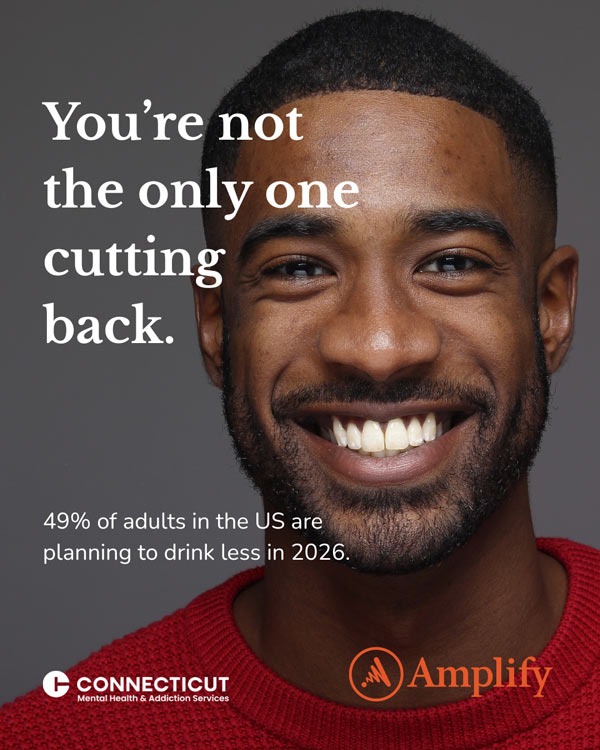
You’re Not the Only One Cutting Back
The “You’re Not the Only One” campaign is a Connecticut based initiative designed to normalize and support adults who are choosing to cut back on alcohol.
Grounded in a social norms approach, the campaign highlights that many adults are already making changes to drink less for their health, relationships, and overall well-being. By shifting the narrative away from pressure and stigma, it reassures individuals that they are not alone in rethinking their alcohol use.
Through relatable messaging, the campaign encourages small, positive changes, whether that means drinking less, taking breaks, or exploring alcohol-free options. It connects individuals to resources and reinforces that reducing alcohol use is a common, supported, and healthy choice within Connecticut communities.
Mindful Drinking Tips
If you’re thinking about lowering or finding ways to better control your alcohol use, integrating these tools may work for you.
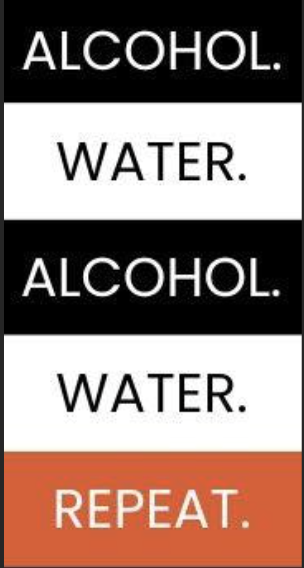
Zebra Striping
Alternate alcohol with nonalcoholic drinks (water, soda, mocktails) to slow down your rate of consumption and to keep hydrated.
Plan your ride
Designate a driver, use rideshare, or public transportation to prevent risky decisions and keep everyone safe on their way home.
Set a limit (# or $)
Set a number of drinks or a spending limit. Having a plan makes it easier to stop once alcohol starts lowering self-control.
Eat before & during
Food does not stop intoxication, but it helps reduce how quickly and how strongly alcohol affects the body.
Pace yourself
Spacing drinks out, sipping instead of taking shots, and drinking water between alcoholic drinks can lower the risk of intoxication and harm.
Know the ABV
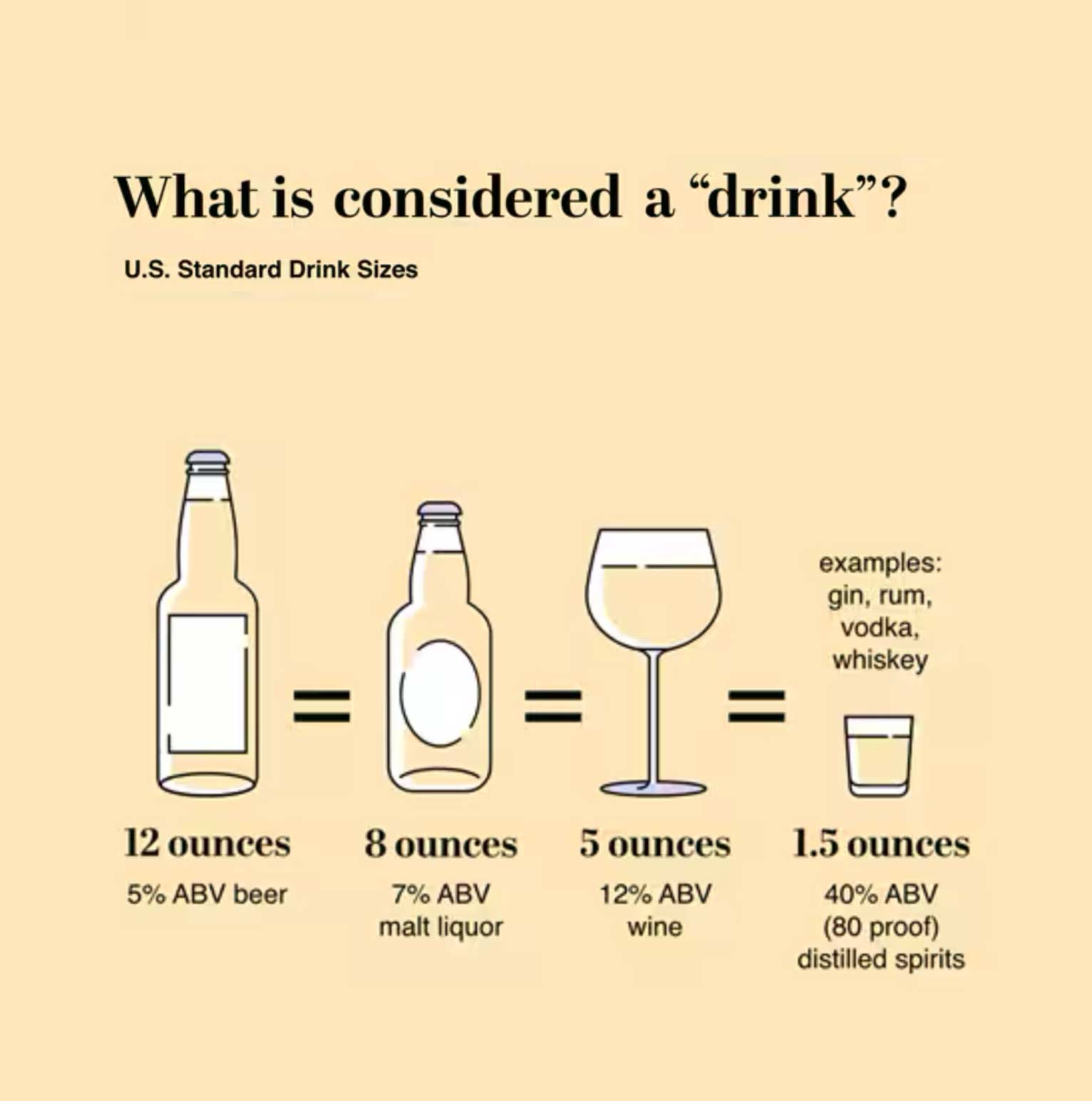
Beer, wine, & mixed drinks vary in strength. Knowing what counts as a standard drink helps you track and moderate your intake.
Calculate the Alcohol Amount in any Drink:
Take the size of your drink in ounces
x
Multiply it by the alcohol percentage (ABV)
÷
Divide the total by .6
=
The final number tells you how many standard drinks are in your drink
16 oz beer at 9% is (16 x .09 / 0.6) = 2.4 drinks
ONE DRINK COULD ALREADY REACH THE RECOMMENDED LIMIT.
How much IS too much?
Alcohol affects your body in more ways than you know. Want better sleep? To get over your seasonal cold quicker? Cutting back on your alcohol intake can make a world of difference.
LEARN HOW ALCOHOL USE IS DEFINED:
Binge Drinking
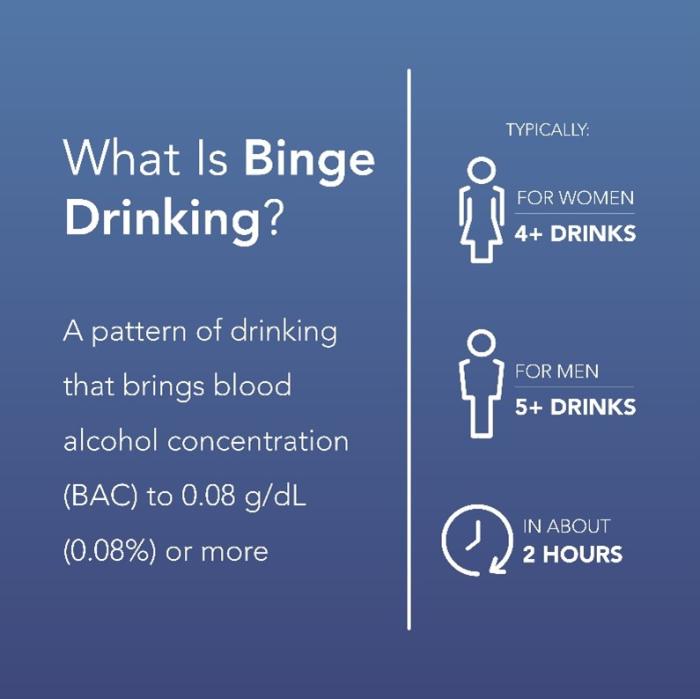
For a typical adult, this pattern is defined as consuming five or more drinks for men or four or more drinks for women within roughly two hours.
Research indicates that youth can reach comparable blood alcohol concentrations with fewer drinks over the same period—approximately three drinks for girls and three to five drinks for boys, depending on age and body size.
Binge drinking =
these amounts in two hours:
FOR MEN
5 drinks
FOR WOMEN
4 drinks
FOR BOYS
3-5 drinks
FOR GIRLS
3 drinks
High-Intensity Drinking
A more extreme form of binge drinking characterized by consuming at least double the binge threshold in a single occasion—10 or more drinks for males or 8 or more drinks for females within a few hours.
High-intensity drinking =
these amounts in two hours:
FOR MEN
10 drinks
FOR WOMEN
8 drinks
Heavy (or Excessive) Drinking
Defined as a sustained pattern of alcohol consumption totaling 15 or more drinks per week for men and 8 or more drinks per week for women.
This includes any amount of alcohol consumed for people under 21 and any amount of alcohol consumed by pregnant women.
Heavy drinking =
these amounts in a WEEK:
FOR MEN
15 drinks
FOR WOMEN
8 drinks
US Dietary Guidelines
In the United States, a standard drink has 0.6 ounces (14 grams) of pure alcohol. The amount of pure alcohol in each drink depends on the alcohol content, or percentage of alcohol by volume (ABV).
THE DAILY GUIDELINE limits for alcohol consumption are:
FOR MEN
2 drinks
FOR WOMEN
1 drink
BAC Effects on the Body
| 0.01 – 0.03 | You may feel slightly warm, calm, and mildly uplifted, with reduced shyness but no noticeable loss of coordination. If you are under 21, driving after any alcohol is illegal. Returning to a BAC of 0.0 may take up to 2 hours. |
| 0.04 – 0.07 | You’re likely relaxed, more talkative, and mildly euphoric. Inhibitions are lowered, and judgment, memory, and reasoning may begin to decline. Coordination can be slightly affected. In Utah, driving is illegal at 0.05 BAC. It may take up to 6 hours to return to a BAC of 0.0. |
| 0.08 – 0.09 | Balance and speech may be affected. Judgment, self-control, risk assessment, and memory are clearly impaired. Driving is illegal at 0.08 BAC in all U.S. states and Washington, DC. It may take up to 10 hours to return to a BAC of 0.0. |
| 0.10 – 0.11 | You may overestimate your abilities and feel more confident than warranted. Loud or inappropriate behavior is more likely, and reaction time is significantly slowed. Driving or making important decisions is unsafe. Returning to a BAC of 0.0 may take up to 12 hours. |
| 0.12 – 0.14 | Clear signs of intoxication are present. Clumsiness increases, and judgment, memory, vision, hearing, and reaction time worsen. Driving or decision-making is extremely unsafe. It may take up to 14 hours to return to a BAC of 0.0. |
| 0.15 – 0.19 | Blackouts or significant memory gaps are likely. Speech, vision, reasoning, and motor control are severely impaired. Physical coordination is greatly reduced. Driving or decision-making is dangerous. It may take up to 16 hours to return to a BAC of 0.0. |
| 0.20 – 0.24 | You are heavily intoxicated and may require help to walk or stand. Tremors, spilling drinks, nausea, or vomiting are common as the body attempts to rid itself of alcohol. There is a high risk of passing out. Returning to a BAC of 0.0 may take up to 18 hours. |
| 0.25 – 0.30 | You are severely intoxicated, need assistance walking, experience mental confusion, dysphoria with nausea and some vomiting. Returning to a BAC of 0.0 may take up to 20 hours. |
| 0.35 – 0.40 | In this percentage range, you’ll likely have alcohol poisoning, a potentially life-threatening condition, and experience loss of consciousness. Returning to a BAC of 0.0 may take up to 22 hours. |
Social Hosting Laws
Crime for any person who owns or controls a property (ex, homeowners, renters) to knowingly permit a minor to possess or consume alcohol and/or cannabis on the premises.
Applies even if:
Watch Child Mind Institute’s How and when do I talk with my kids about alcohol and drugs? on Youtube
KNOW THE COST : ARRESTS & LAWSUITS
Penalties: Class A misdemeanor, meaning up to 1 year in jail, up to a $2,000 fine and possible probation
You can be arrested for Social Hosting if police determine that minors drank in your home, even during a holiday get-together.
You could face a civil lawsuit if a drunk or high minor hurts themselves or someone else.